Some love them, some dislike them. Kitchen gadgets! What exactly is a kitchen gadget? By definition, a kitchen gadget is a specialised, often small tool or device, designed to perform one specific function or a single kind of task during food preparation.
Why do we love them? In my own kitchen, a gadget must satisfy fairly strict criteria before it gets into my kitchen:
Ease of use: It must make the job easier.
Size: It must fit into a drawer or cupboard.
Maintenance: It must be dishwasher safe.
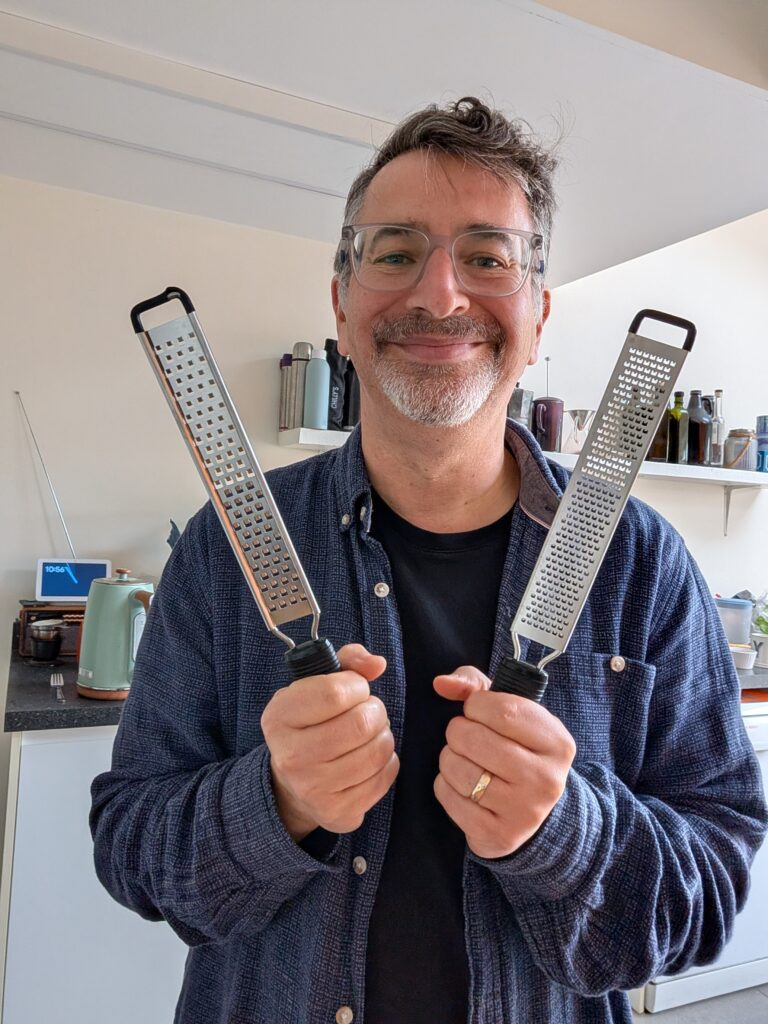
The experience: Above all, I want to feel good when I use it, time and time again, justifying the decision to buy it in the first place. For me, it’s the microplane grater and zester which is my ‘go to’ of choice.
When the criteria aren’t met, things go wrong. Most of us have a ‘graveyard’ of kitchen gadgets tucked away, items that seemed a great idea at the time, only to rapidly become an irritation. They were supposed to save time and streamline the process but instead they feel clunky, add friction and leave us thinking, “What a waste of time and money.”
When Precision Works: The Tool and the Strategy
As a kitchen gadget is built to fulfil a single, dedicated purpose, it is not a generalist. When designed well and used correctly, it excels.
Take the microplane grater (a favourite). It satisfies my criteria completely (part of what we call a well-formed strategy in NLP). It does not pretend to stir soup, or chop an onion, when it comes to grating hard cheese, garlic or zesting, it is supreme. I wouldn’t attempt to use it for anything else.
In many ways, the components of NLP, our language patterns, skills, interventions and knowledge are like a collection of purposefully designed tools. Each is uniquely suited to a specific task. Even better, unlike utensils in a drawer, they can be combined to create powerful change in our behaviour.
It starts to go wrong when ‘we’ become the gadgets.
In the Drawer
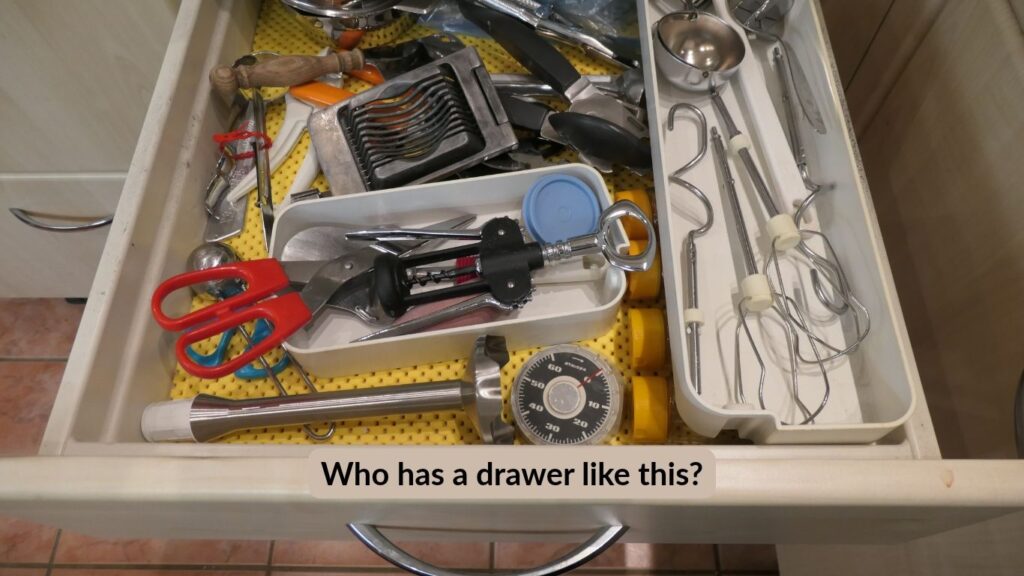
By the time we reach middle age, and take a moment of reflection as we tend to do more of, it is likely as you think about it, that you have spent a large amount of time operating like a brilliantly organised, highly efficient kitchen drawer or cupboard (or ‘gadget garage’) of gadgets for everyone around you.
Yes, you have become a walking collection of specialised tools:
Go big with the Bean-to-Cup Coffee Machine: Delivering intense, high-impact output under extreme pressure at a moment’s notice.
Go multi-tasking with the Food Processor: Blitzing through piles of problems, operational logistics, and information to produce clean, ordered results.
Go simple with the Microplane Grater: Extracting the essentials out of a tense, complicated situation whilst leaving all the ‘fluff’ behind.
You have spent years proudly performing these important, specialised functions during your career, for you partner, family and now increasingly, ageing parents.
As it changes, the children grow independent and need you less, they even move out! The career reaches a plateau of routine. In a moment a question starts to form in your head: “If I am not processing, fixing or managing for everyone else, who am I?”

Finding the ‘Chef’ Beneath the Tools
There is a model (developed by Robert Dilts) called the Logical Levels of Change. It offers a useful map of human experience and explains why so many of us hit a wall of disconnect around midlife. It’s like a pyramid or ladder, starting at the bottom moving to the top.
There are six levels.
SPIRITUALITY – purpose
IDENTITY – who you are
BELIEFS / VALUES – why you do it
CAPABILITIES – how you do it
BEHAVIOUR – what you do (eg gadgets)
ENVIRONMENT where and when
Think about how your life has been spread across these rungs:
- Environment (Where and when?): The boardroom, boxes on the screen, the home office, kitchen, cheering on the sidelines of the football pitch, the taxi service to name just a few. Weekdays, weekends, evenings, it can be a constant.
- Behaviour (What are you doing?): This is where we find the gadgets. The never-ending to-do lists, unread emails, the emotion state management, the logistics. For years you have taken pride for the juggling.
- Capabilities (How do you do it?): The horizon scanning, crisis management, emotion handling and multitasking. Your competence is rarely questioned; problem is it is just assumed you’ve got this.
- Beliefs & Values (Why do you do it?): The self-talk in the background, “I must be the reliable one,” “If I drop the ball, it all falls apart,” or perhaps a little deeper introspective “My worth depends on how useful I am to others.”
- Identity (Who are you?): At the core of it all. Who are you when the demands stop and the house goes quiet?
- Purpose (how and where you fit into the wider system or picture)
“Who am I?” Is a common question asked by clients and students interested in NLP. Think about it like this; as you invested and focused your energy into managing the day to day (increased), the level of identity may have decreased.
You may have experienced this one way or another during Covid and lockdown Covid with the various roles we had to adopt. For many, self identity went to the back of a long queue. Good news, it has not been lost, just more of a disconnection hidden away. It can be a mistake confusing what you do, for who you are.
Moving from Jack of All Trades to being your own MasterChef
A drawerful of gadgets creates an illusion of purpose. It can leave you exhausted, endlessly switching between functional roles. When you define yourself as the ‘fixer’ or ‘provider’, you start to lose perspective of your own journey and destination.
A MasterChef does not define their worth by the garlic press or measuring spoons. They define themselves by their palate, intuition and creativity, needing little more than a single, high-quality chef’s knife. As they understand the underlying principles of flavour and technique, they can walk into any kitchen, using any ingredients, and create something extraordinary on their own terms.
In NLP, our development courses are not about you learning and gaining more ‘mental gadgets’ to juggle an already frantic life. You already know how to work hard and you certainly don’t need more hacks or ‘how to’s’. This is about something else, much more important, it is who you are, your identity.
During the NLP Training whilst learning skills and approaches to work with others, you start work on your relationship with self. As you progress and grow you discover more about yourself, explore your ‘corners’, perhaps visit areas that you don’t always go to, your strengths, qualities, values and your boundaries.
This can only take place in a safe supported space as you push yourself out of your comfort zone to gain an empowering perspective. So that when you are ready, you can take a step back, lose those unhelpful gadgets and give yourself the space and permission to create your own next chapter.

If you would like to explore our development programmes in more detail or discover how it aligns with your professional and career aspirations, get in touch to schedule a call.